

Say Goodbye to Flakes: Why You Need the Right Moisturizer for Dry Skin
If your skin often feels tight, itchy, or looks flaky, you are not alone. Dry skin, scientifically known as xerosis, is a common issue that can make makeup application a nightmare and leave your complexion looking dull. But achieving that coveted smooth, soft, and dewy glow is not some pipe dream; it simply requires finding the perfect moisturizer for dry skin.
Of course, a good moisturizer is the most important part of any skin care routine. Not only does it add water to the surface of your skin, but it works to lock in moisture, rebuild the skin barrier, and protect your face against environmental aggressors. People with persistent dryness can’t just use a lightweight lotion. You need something strong and concentrated; you need a cream based formula prepared to provide really strong, lasting hydration.
In this comprehensive guide, we look at the ingredients, routines, and product types that will take your dehydrated complexion from rough to radiantly hydrated.
The Hydration Heroes: Key Ingredients to Look For
But when it comes to choosing a moisturizer for dry skin, you really just need to read the ingredient list. The best creams combine three different classes of moisturizing agents in harmony to repair and hydrate the skin barrier.
1. Humectants (The Water Magnets)
These ingredients draw water from the environment, or deeper layers of your skin, into the top layer of the epidermis. They are essential for initial plumpness and hydration.
Must Haves: Hyaluronic Acid the hydration superstar, Glycerin, and Urea.
2. Emollients (The Smoothers)
Emollients are the fatty ingredients which fill in the cracks and roughness on the skin’s surface, smoothing and softening the skin instantly. This gives your skin that supple feel.
Must Haves: Ceramides, Shea Butter, Jojoba Oil, and Squalane, all necessary natural skin lipids.
3. Occlusives (The Sealants)
Occlusives work by forming a physical barrier on the skin’s surface to inhibit TEWL the number one contributor to chronic dryness. They lock in all the good work done by the humectants and emollients.
- Must Haves: for serious cases, Petrolatum, Dimethicone, Mineral Oil, and thick waxes.
The best moisturizer for dry skin will contain a strategic mix of all three to ensure maximum efficacy.
Choosing the Best Face Moisturizer for Dry Skin
The skin on your face is thinner and more sensitive than the skin on your body, so targeted therapy is required. When choosing a face moisturizer for dry skin, go for rich formulas that are non comedogenic meaning they won’t block your pores.
Look for a formula that heavily focuses on Ceramides. Dry skin tends to have a weak barrier, and returning those natural lipids is really the key to long term health. Those include a trio of essential ceramides along with hyaluronic acid in a thick cream base.
Extra Care for Very Dry Skin
If you have eczema, winter itch, or any other extreme dry skin conditions, then you will require a highly concentrated moisturizer. In such cases, you’ll want to lean into products with a high concentration of occlusives, such as petroleum jelly or a heavy healing ointment. These products should be applied as the last step in your evening routine, trapping all previous layers of hydration beneath a protective seal. A little heavy for some, these are unbeatable when it comes to soothing and repairing severely chapped or rough patches.
Your Ultimate Dry Skincare Routine: Beyond the Cream
It’s not just about slapping on some moisturizer; a routine for dry skin is all about creating the right environment for your skin to flourish. Here’s how to optimize your skincare ritual for soft, hydrated results:
1. Cleanse Gently
Switch to a hydrating, non foaming cream or oil cleanser from harsh, stripping cleansers. The facial skin should always be washed with lukewarm and never hot water; hot water aggravates dryness.
2. Treat and Hydrate
After cleansing, apply a hydrating toner or serum high in Hyaluronic Acid to a dampened face. This is important: Hyaluronic Acid works best when applied onto moist skin, which gives it some water to bind onto.
3. Lock It In (The 3-Minute Rule)
Now apply your face moisturizer for dry skin right after you pat your face dry—within three minutes of cleansing, at most. This makes sure you seal in the hydration from above and it won’t evaporate. Applications on slightly damp skin really increase the effectiveness of the moisturizer hugely.
4. Daytime Protection
Never give up on SPF. The sun further degrades the skin barrier, causing more moisture loss and increased roughness. Use a moisturizing cream that contains broad spectrum SPF 30 or higher to offer protection and sustained hydration.
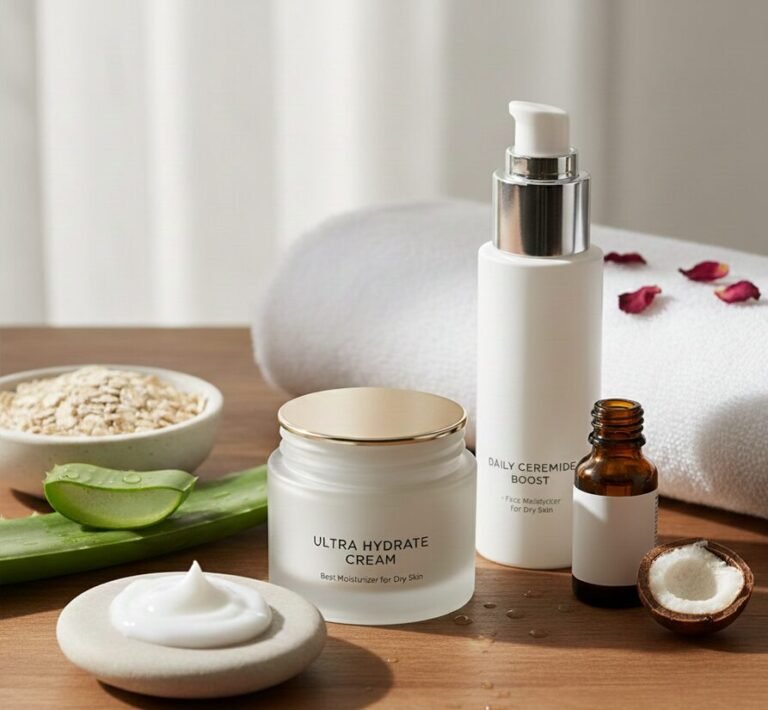
Going Green: Natural Moisturizer for Dry Skin Options
For those who prefer ingredients straight from nature, a natural moisturizer for dry skin can really work wonders. While “natural” doesn’t necessarily always mean “better” remember to always patch test, several plant derived ingredients are powerhouse hydrators:
Shea Butter: A very rich emollient, it is full of fatty acids and vitamins, thus making it an incomparable thing for deep moisturization. It’s perfect for the body and patches on the face that are very dry.
Virgin Coconut Oil: Great occlusive agent, forms a thin barrier. In the face, use with caution for acne prone skin, as it can be comedogenic to some.
Aloe Vera: More of a humectant and a soother, pure Aloe Vera is a wonderful prep step before applying a heavier cream.
Oatmeal: Perhaps colloidal oatmeal is best known for its anti inflammatory and soothing qualities, which make it an excellent addition to a moisturizer for dry skin that’s also sensitive or irritated.
Your Skin’s New Beginning
Don’t let dry skin get in the way of your confidence or comfort. It may take time to find the perfect moisturizer for dry skin, but by paying attention to rich formulas, active barrier repairing ingredients like ceramides, and maintaining a regular routine for dry skin, you’ll be able to dramatically improve your complexion. Whether you prefer a dermatologist recommended cream or an ultra effective natural moisturizer for dry skin, application is key to finally acquiring the smooth, supple, irresistibly soft skin you’ve been longing for. Invest in the right hydration today your skin will thank you.
Frequently Asked Questions
Should I use a lotion or a cream if I have dry skin?
For dry skin, you should always choose a cream or an ointment over a lotion. Lotions have a higher water content, which makes them feel lighter, but they are less effective at sealing in moisture. Creams are thicker and contain a higher concentration of oils and occlusive agents (like Shea Butter or Petrolatum) that create a more robust barrier to prevent water loss, making them the superior moisturizer for dry skin. If your skin is extremely dry, an ointment is the best choice.
Can using too much moisturizer make my skin lazy?
No, this is a common myth. Your skin does not become “lazy” or stop producing its natural oils because you are using a good face moisturizer for dry skin. Using an effective moisturizer actually helps repair and strengthen your natural skin barrier, which improves your skin’s overall health and function. Consistency is key, especially as part of a dedicated dry skin care routine.
For dry but acne prone skin, which skincare ingredients are beneficial and which should be avoided?
If you have dry, acne prone skin, look for products labeled “non comedogenic” to ensure they won’t clog your pores.
- Look for: Water based gel creams, Hyaluronic Acid, Glycerin, and Ceramides.
- Avoid: Heavy, pore clogging oils like mineral oil and petrolatum for your face (these are best reserved for moisturizer for extremely dry skin patches on the body). Also, avoid irritating ingredients like strong fragrances and alcohol.